
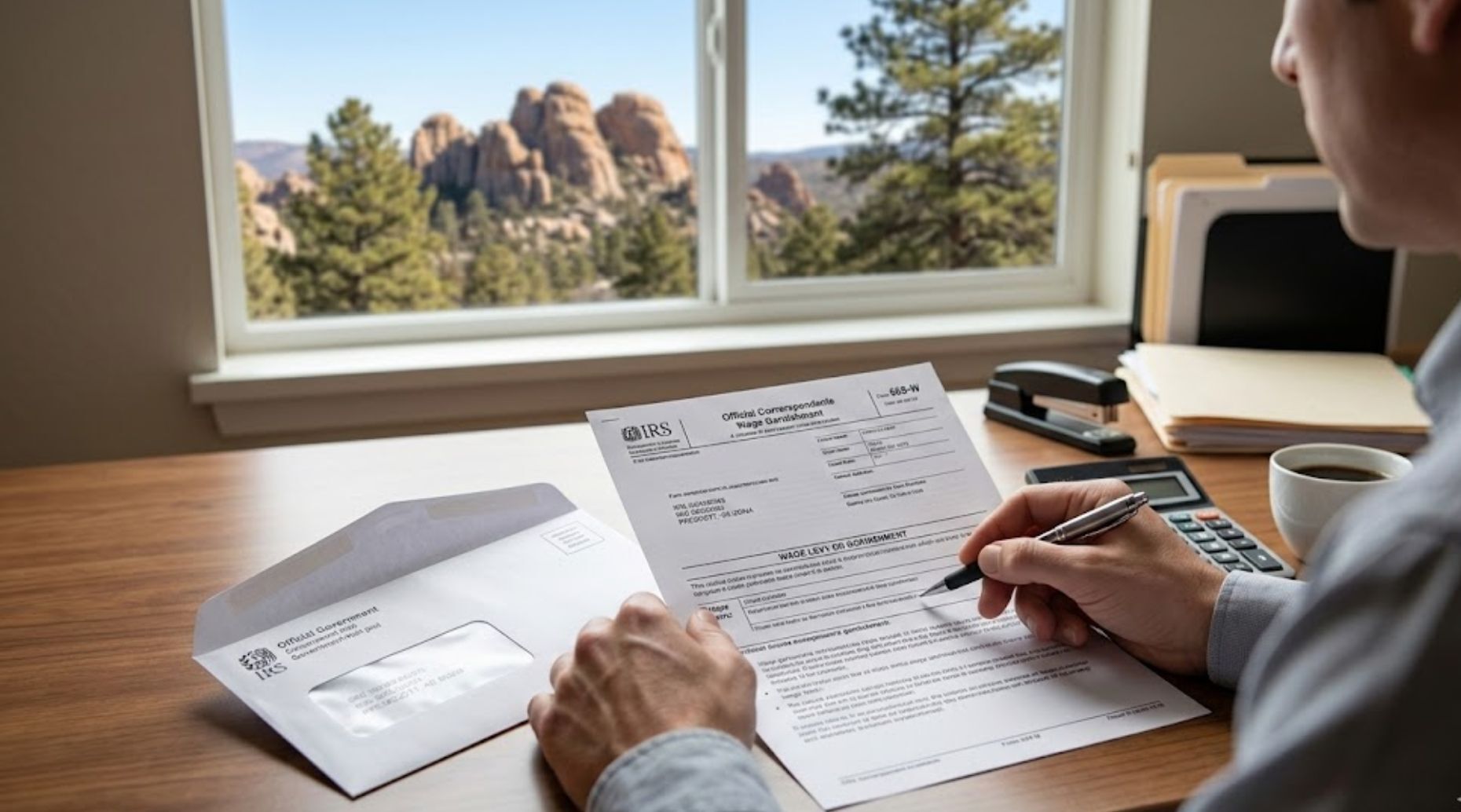
Getting a wage garnishment notice from the IRS is stressful—especially in Prescott. When the IRS orders a garnishment, your employer withholds part of your paycheck to satisfy unpaid taxes. You have options and acting quickly improves outcomes. Below we outline what a garnishment means, immediate steps to take, and common resolution paths. If you want local help, ONeill Tax Resolution can assist.
What an IRS Wage Garnishment Is — and How It Affects Prescott Residents
An IRS wage garnishment permits the IRS to collect wages directly from your employer, reducing take‑home pay and straining household budgets. Garnishment is an enforcement step but not always permanent; there are ways to stop, pause, or negotiate payments. Knowing your rights and options is essential.
How the Wage Garnishment Process Works in Prescott, AZ
The IRS typically issues a Final Notice of Intent to Levy and Notice of Your Right to a Hearing (often a CP504 or LT11). If not resolved, the IRS can levy your employer and payroll withholding begins. Because this can happen quickly, prompt, organized action preserves options and limits harm.
Financial and Legal Consequences of a Wage Garnishment
Garnishment lowers disposable income and can make it difficult to meet bills. Ignoring notices can lead to liens or further levies. Professional representation reduces risk of errors, unnecessary disclosures, and escalation.
Immediate Steps to Stop an IRS Wage Garnishment in Prescott
If you receive a garnishment notice, act immediately. Common early steps include requesting a temporary collection hold while you gather records and evaluate options. A local tax professional helps ensure correct responses and avoids moves that could worsen the situation.
How to Respond to CP504 and LT11 Notices Within 30 Days
CP504 and LT11 notices require an organized, timely reply. Follow these core steps:
- Recognize the urgency: These notices can lead to garnishment quickly if ignored.
- Gather records: Pull W‑2s, 1099s, bank statements, recent pay stubs, and deposit documentation.
- Pull your Wage & Income Transcript: Confirm the IRS’s income sources and spot errors.
- Build a clear response: Prepare concise explanations and supporting documents.
- Get professional help: A tax resolution specialist can review materials, draft your response, and request protections.
- File on time: Submit within the 30‑day window to preserve appeal rights.
- Monitor and follow up: Watch for IRS replies and provide any requested information promptly.
These steps help correct errors and stop collection before it escalates.
Why Filing Missing Tax Returns Can Stop a Garnishment
Unfiled returns or underreported income commonly trigger garnishments. Filing missing returns corrects the record, demonstrates compliance, and can open doors to payment plans or holds that halt enforcement.
IRS Tax Resolution Options for Prescott Residents Facing Garnishment
Prescott taxpayers can pursue practical options to address IRS debt, including:
- Temporary collection hold: Ask the IRS to pause collection while problems are resolved.
- Installment agreement: A monthly payment plan based on your ability to pay.
- Penalty abatement: Relief from penalties in qualifying situations.
- Hardship‑based relief: Protections for essential income when true financial hardship exists.
- Offer in Compromise: A potential settlement for less than the full liability if you qualify.
Acting early and consulting a tax professional increases the chance of a workable resolution.
How Installment Agreements Make Tax Debt Manageable
Installment agreements spread payments over time, stop immediate enforcement, and ease cash flow. They’re often the fastest way to regain breathing room—especially if arranged before levies start.
What an Offer in Compromise Does and Who It Helps
An Offer in Compromise (OIC) may let eligible taxpayers settle for less than the balance by demonstrating limited ability to pay. The IRS requires detailed financial disclosure; experienced help improves the likelihood of success.
Why Work with a Local Prescott Tax Attorney for Wage Garnishment Help?
Local tax attorneys know common Prescott and Northern Arizona issues—multiple jobs, seasonal work, payment app activity, and retirement distributions—that create confusing IRS matches. A local attorney offers personalized guidance, handles IRS communication, and works to prevent escalation to liens or levies.
How ONeill Tax Resolution Delivers Practical, Compassionate Relief
ONeill Tax Resolution begins with a transcript review and records comparison to find errors or missing forms. We prepare reconciliations, request temporary collection holds when appropriate, and guide corrections, amendments, or negotiations with the IRS to stop enforcement and restore clarity.
Client Successes: Stopping Garnishments in Prescott
Many Prescott clients stop wage garnishments through prompt responses, careful documentation, and focused representation. Quick action and a tailored plan are the common elements in those successes.
| Tax Resolution Option | Description | Key Benefit |
| Temporary Collection Hold | Ask the IRS to pause collection activity while issues are resolved | Stops immediate escalation to liens or levies |
| Installment Agreement | Monthly payment plan based on your ability to pay | Makes debt manageable without aggressive collection |
| Offer in Compromise | Negotiate to settle for less than the full balance | Reduces overall liability when you qualify |
| Hardship-Based Relief | Relief options for taxpayers facing true financial hardship | Protects essential income and expenses |
Frequently Asked Questions
What are the long-term effects of wage garnishment on my finances?
Garnishment reduces disposable income and can make it harder to meet monthly obligations; addressing the tax issue quickly helps prevent longer‑term damage to finances and credit.
How can I find a qualified tax professional in Prescott?
Ask for referrals, check online reviews, and choose someone with experience in IRS collection actions and wage garnishments. Verify credentials and schedule a consultation.
What documentation do I need to provide to a tax professional?
Bring pay stubs, W‑2s, 1099s, bank statements, prior returns, and any IRS notices. Records of expenses and debts help your advisor evaluate options.
Is there a time limit for stopping a wage garnishment?
You generally have 30 days from certain IRS notices to respond and preserve appeal rights. Missing that window makes stopping garnishment harder, though other options can remain available.
What are the risks of not responding to IRS notices?
Ignoring notices can lead to continued garnishment, additional levies, or liens and limits your resolution options.
Can I stop a wage garnishment if I am facing financial hardship?
Yes. Showing hardship can qualify you for a temporary collection hold or an installment agreement tailored to your ability to pay; documentation of income and expenses is required.
What should I do if I receive a CP504 or LT11 notice from the IRS?
Act immediately: gather W‑2s, 1099s, bank records, and deposit documents; pull your Wage & Income Transcript; and prepare a clear, documented response. Consider a tax resolution professional to draft and submit the response within the 30‑day window.
Can I appeal an IRS wage garnishment decision?
Yes. If the garnishment is incorrect or resolved, you can request a hearing or file an appeal; a concise written appeal with supporting evidence improves the chance of a favorable outcome.
How can I prevent future wage garnishments after resolving this issue?
Stay current on filings and payments, arrange installment agreements if needed, keep accurate income records, and consider ongoing professional guidance to reduce risk.
What happens if I ignore IRS wage garnishment notices?
Ignoring notices typically makes matters worse—the IRS can impose additional levies or liens. Prompt action is the safest path to resolution.
Can I negotiate a lower amount for my tax debt?
Possibly. An Offer in Compromise can settle eligible accounts for less than the full amount, but it requires full financial disclosure and proof of inability to pay; professional help improves success odds.
What does a tax attorney do to resolve wage garnishment issues?
A tax attorney reviews your account, organizes documentation, drafts responses, negotiates with the IRS, and represents you in hearings if needed to seek the best possible outcome.
Conclusion
Wage garnishment is serious but often reversible. By acting quickly, gathering the right records, and pursuing relief—temporary holds, installment agreements, or an Offer in Compromise—Prescott residents can often stop garnishment and regain control. For local guidance, contact a tax professional who knows how to protect your income and resolve the issue.